
When a Parking Garage Becomes a Neighborhood

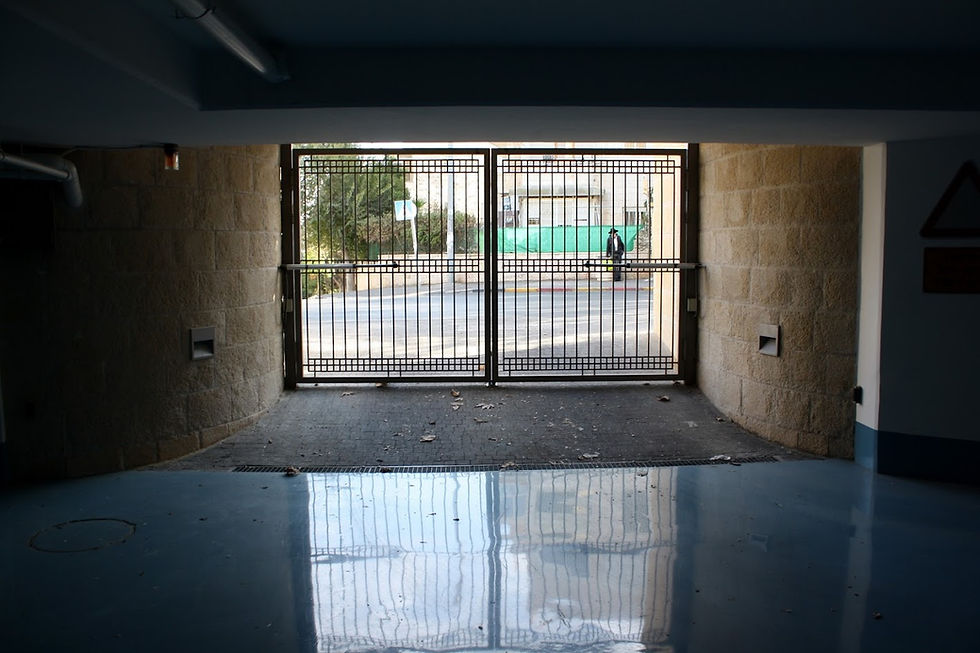
I was parking in an underground garage before a meeting recently when I realized this wasn’t just a parking lot. It was a neighborhood. There were apartments, small shops, and even a shul.
People weren’t simply passing through on their way to their cars; they were going about their daily lives. Some were returning home while others were stopping at neighborhood businesses. It felt less like the bowels of a building and more like a Jerusalem street that happened to be underground. I found it fascinating.
The garage itself wasn't really the story. As a real estate agent, I spend a great deal of time thinking about neighborhoods and the relationship between supply and demand. This experience was the most vivid example I had ever seen of what happens when demand overwhelms supply.
Jerusalem has always been a city that people are reluctant to leave. Families want to remain close to parents, children, schools, shuls, and friends. When the supply of housing in a neighborhood becomes limited, many people look for ways to stay before considering a move elsewhere.
Sometimes the response is straightforward. New apartment buildings are constructed, older buildings undergo urban renewal, and communal infrastructure expands.
Sometimes the solutions require more creativity. Apartments are divided, basements are converted, and storage rooms become offices. In this case, a parking garage evolved into a neighborhood where people live, work, shop, and raise their families.
What struck me most was that no one seemed to find it unusual. Life had simply adapted to the space, and the neighborhood had grown organically in ways the original planners never imagined.
To me, that's one of the remarkable things about Jerusalem. People don't simply live in the city's neighborhoods; they become attached to them. Many would rather live in a smaller apartment, or even an unconventional one, than leave the neighborhood that has become home.
Of course, there is a downside.
Parking garages were never intended to become neighborhoods. Makeshift housing and commercial space can create challenges not only for quality of life, but also for safety, infrastructure, and accessibility. Even the most resourceful communities eventually reach the limits of what can be improvised.
The experience also helped me appreciate that the best neighborhoods don't simply provide housing; they anticipate how people will actually live. They include schools, parks, shopping, community centers, medical clinics, and shuls. They are planned around families and future growth rather than forcing residents to adapt as the neighborhood evolves.
Thankfully, that philosophy has become increasingly evident in Jerusalem's newest neighborhoods.
Take Givat Hamatos, for example. The vision has never been simply to build thousands of apartments. From the outset, the plans have included a large central park, educational facilities, retail areas, community centers, and space for numerous shuls. The goal is to create a complete neighborhood rather than simply a collection of residential buildings.
The planning also reflects the people who are expected to live there. With many young families purchasing homes, schools and preschools have been incorporated into the neighborhood from the beginning. Similarly, with a significant number of Anglo families choosing Givat Hamatos, Rabbi Kalman Topp will be making aliyah and establishing a new community to serve this growing population.
I suspect I'll never look at that parking garage the same way again. More than merely a lesson in supply and demand, that experience reminded me that when housing becomes scarce, communities will always search for creative ways to remain together. It also impressed upon me that good urban planning anticipates residents' future needs so neighborhoods never have to turn parking garages into an extension of the community.
Gedaliah Borvick is the founder of My Israel Home (www.myisraelhome.com), a boutique agency that guides overseas buyers through the complexities of purchasing and selling homes in Israel. To receive his monthly market updates, contact him at gborvick@gmail.com.


